
Is Fluorosilicone Right for Your Application? A Seal Selection Checklist
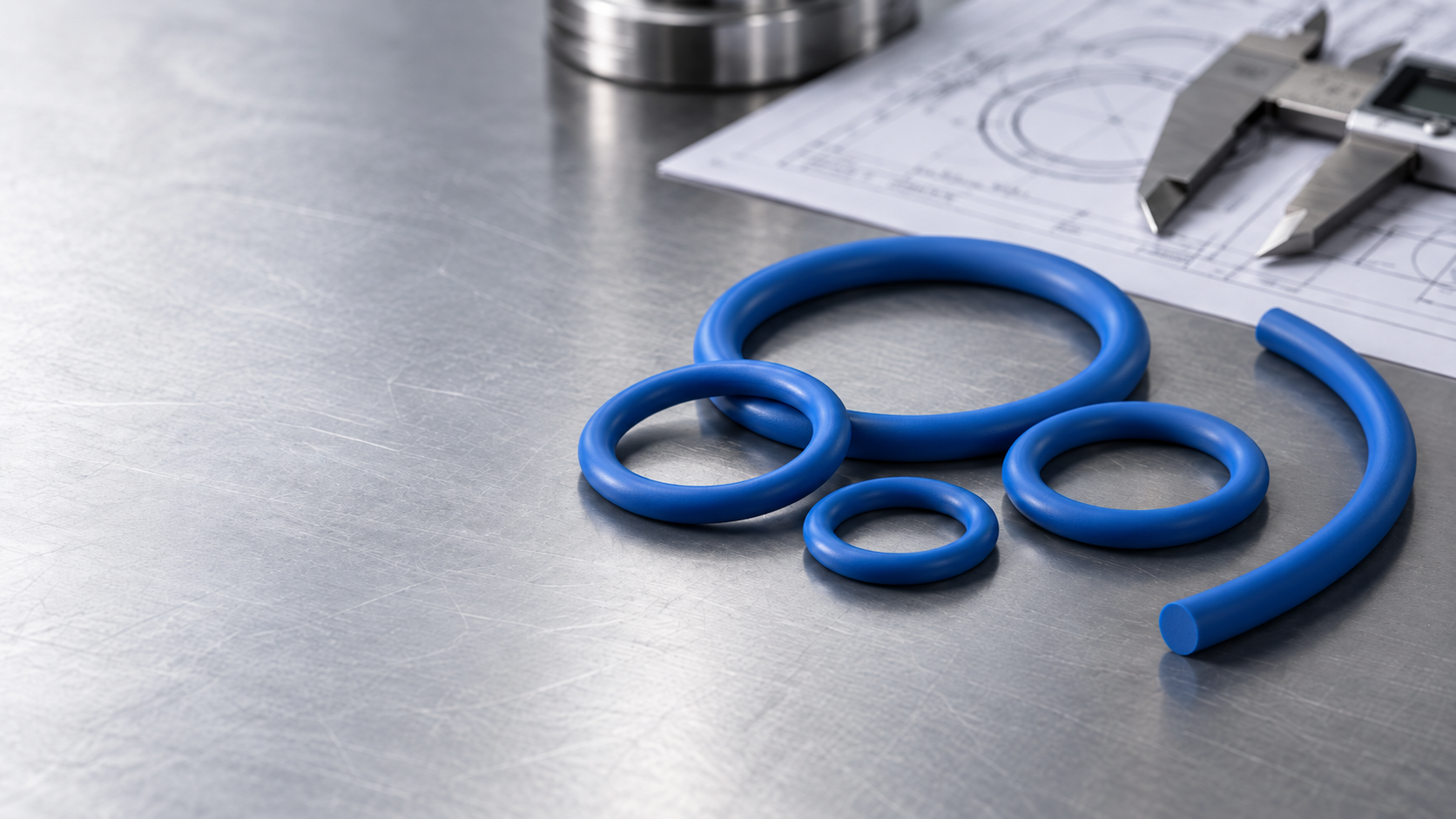
Fuel exposure and cold temperatures can pull seal selection in different directions. Fluorosilicone is designed to bring those needs together, but it still has limits. Here’s how to assess whether it suits your application.
Also known as FVMQ, fluorosilicone is a specialized material, not a one-size-fits-all upgrade. Before choosing it, take a closer look at what your seal will face in service.
Start with the fluid
Fluorosilicone is often considered for applications involving certain fuels, oils, and hydrocarbons. But “fuel resistant” doesn’t mean compatible with every fuel. Blends, additives, and the specific compound can all affect compatibility.
Start by identifying every fluid the O-ring may contact, including cleaning products. If you know the blend or additives, include those details too. The more specific the information, the more useful the compatibility assessment.
Think beyond the normal operating temperature
Fluorosilicone is valued for staying flexible at low temperatures while offering useful heat resistance. But an application’s temperature range is more than its usual operating temperature.
Think about cold starts, shutdowns, short-term heat spikes, and how long the seal is exposed at each temperature. The limits depend on the specific compound and service conditions, so published ranges are a guide rather than a guarantee.
Will the O-ring stay still?
A seal that stays in place has different demands from one that slides, rotates, or rubs against another surface. Fluorosilicone has mechanical characteristics similar to silicone, and its resistance to tearing and abrasion may limit its suitability in applications with movement.
Include any movement, vibration, or repeated contact in your assessment. Even small amounts of motion can matter over time.
Consider the design around the seal
The material is only one part of the equation. Pressure, groove dimensions, clearances, surface finish, and installation all contribute to sealing performance.
That’s why a material that works well in one assembly may not be the right choice for another, even when both encounter the same fluid. Review the design details alongside the material requirements.
Make sure you have the right size and form
Is the application calling for a standard O-ring, a custom size, cord, or another profile? A part number, drawing, sample, or accurate measurements can help clarify what’s needed.
It’s also useful to know whether the part must meet a particular material specification, qualification, or documentation requirement. If a drawing names a standard or compound, include it when evaluating a replacement. Similar material names don’t necessarily mean a seal meets the same requirement.
A quick checklist for your O-ring request
When discussing a fluorosilicone O-ring, gather as many of these details as you can:
- The fluids the O-ring will contact, including blends or additives
- Minimum, normal, and maximum temperatures
- Whether the seal is stationary or moving
- Operating pressure and relevant design details
- Seal type, dimensions, and any drawing or sample
- Material specifications or qualification requirements
So, is fluorosilicone a fit?
Fluorosilicone may be worth considering when an application combines fuel or oil exposure with a need for low-temperature flexibility. It may be less suitable when the seal faces significant abrasion or movement, or when the application falls outside the documented limits of the specific compound.
The best choice comes down to the details of your application. COR Manufacturing supplies fluorosilicone O-rings, cord and gaskets, along with other sealing materials. Share your fluid, temperature, design, and specification requirements with the team to discuss options for your application. Contact COR Manufacturing.